From Open Sources to Defensible Insight
ALETHEIA helps analysts organize fragmented reporting, trace evidence across sources, connect related developments, and maintain a clear line between information and judgment.
Information is abundant. Analytic clarity is not.
Analysts rarely struggle because information is unavailable. They struggle because relevant reporting is dispersed across sources, relationships are difficult to preserve, and the reasoning behind an assessment can become separated from its evidence.
ALETHEIA is an analyst-centered environment built to bring structure to that process. It organizes sources, claims, events, indicators, and priority questions within one connected workspace—without removing the analyst from the judgment.
Orient the Environment
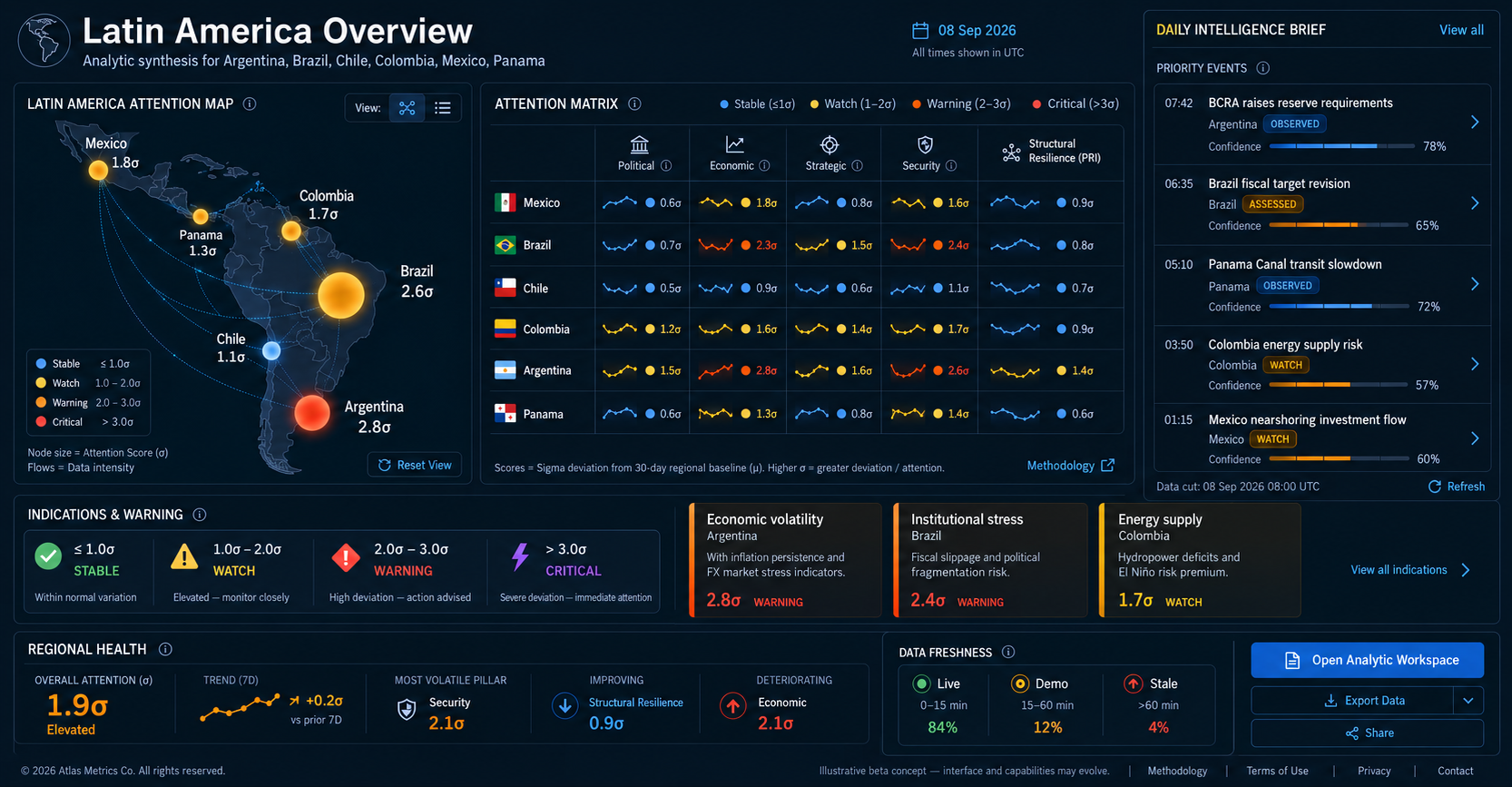
ALETHEIA provides a structured view of the operating environment, allowing analysts to compare countries, track changes, and identify developments that require closer attention.
Regional maps, attention measures, indications and warnings, current events, and data-freshness indicators work together to help analysts distinguish meaningful change from routine reporting.
The value: A clearer operating picture without reducing complex environments to a generic news feed.
Illustrative beta concept. Interface and capabilities may evolve.
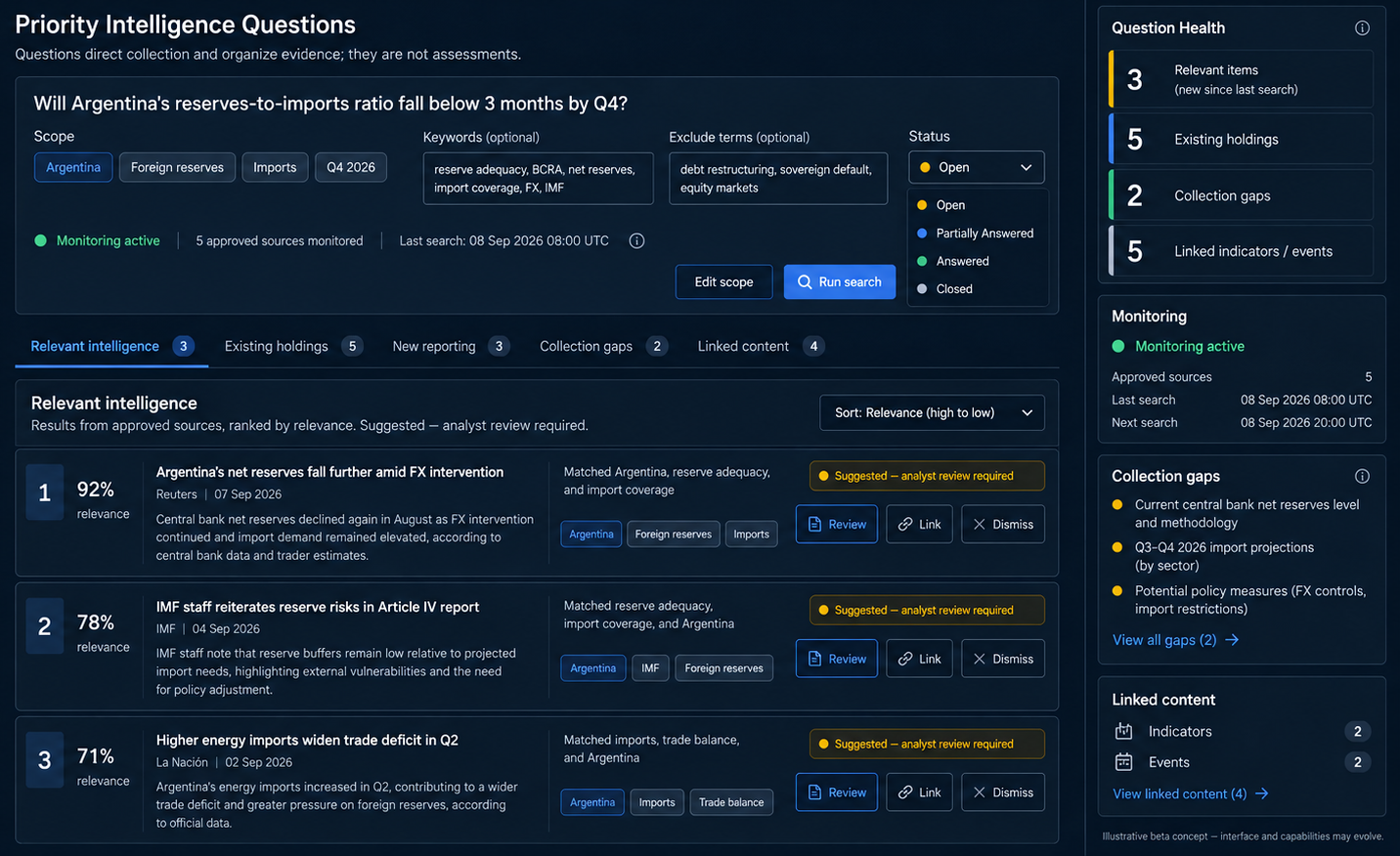
Priority Intelligence Questions define what analysts need to understand. ALETHEIA connects those questions to relevant events, indicators, sources, and unresolved information requirements.
As ALETHEIA matures, question-driven discovery will search approved source holdings, monitor incoming reporting, rank potentially relevant material, and explain why each result surfaced. The analyst decides what becomes part of the evidence base.
The value: Persistent, question-led collection that reduces search burden while preserving analyst control.
Illustrative beta concept. Interface and capabilities may evolve.
Trace the Evidence
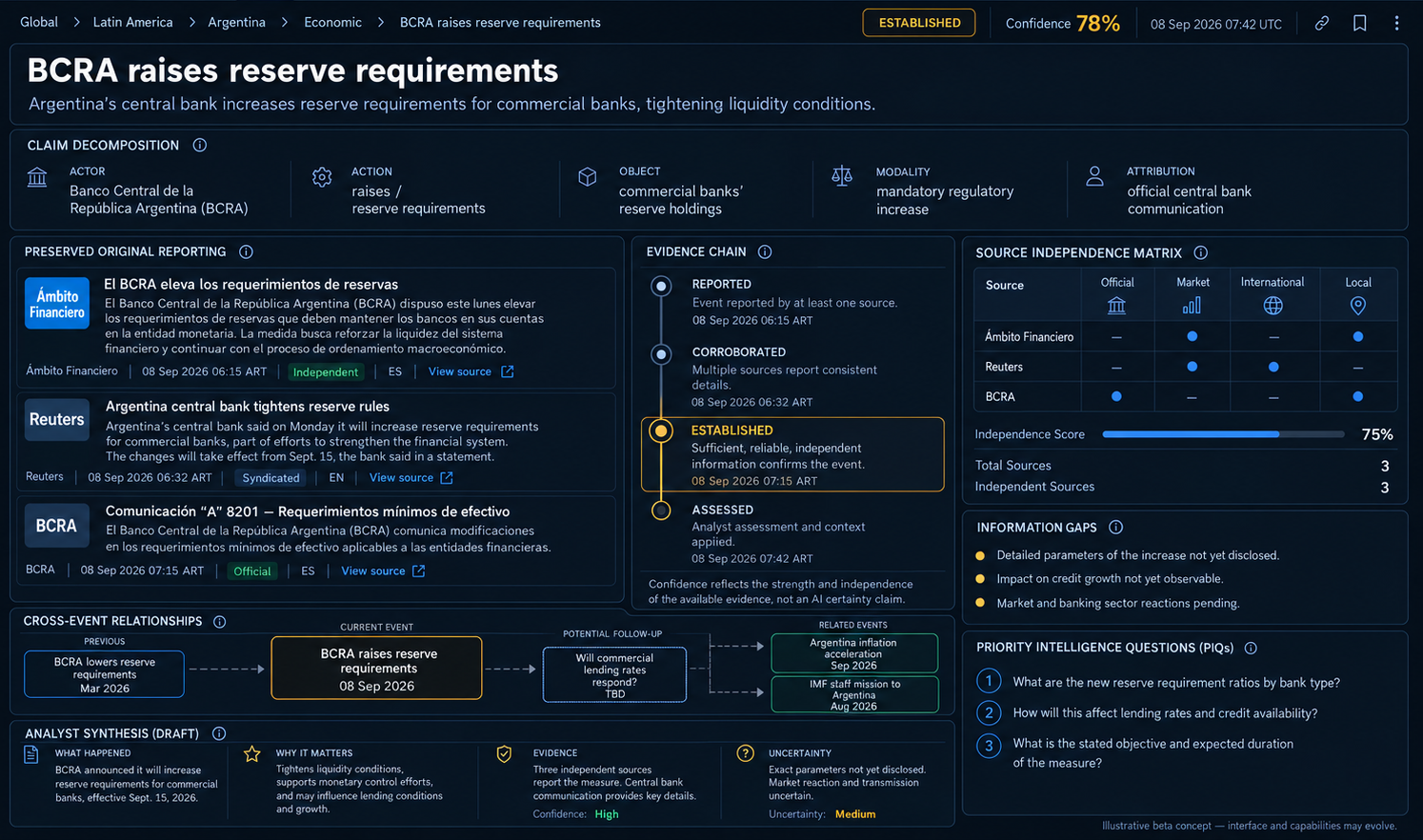
ALETHEIA structures individual developments into their essential components: actors, actions, objects, modalities, attribution, and supporting sources.
Original reporting remains preserved alongside corroboration status, source independence, information gaps, related events, and draft analyst synthesis. This creates a visible evidentiary trail from what was reported to what the analyst ultimately judges.
The value: Assessments that are easier to examine, update, challenge, and defend.
Illustrative beta concept. Interface and capabilities may evolve.
Direct the Analysis